速度与激情8
China pilots "quiet communities" to curb urban noise, disputes_我的网站

一 |
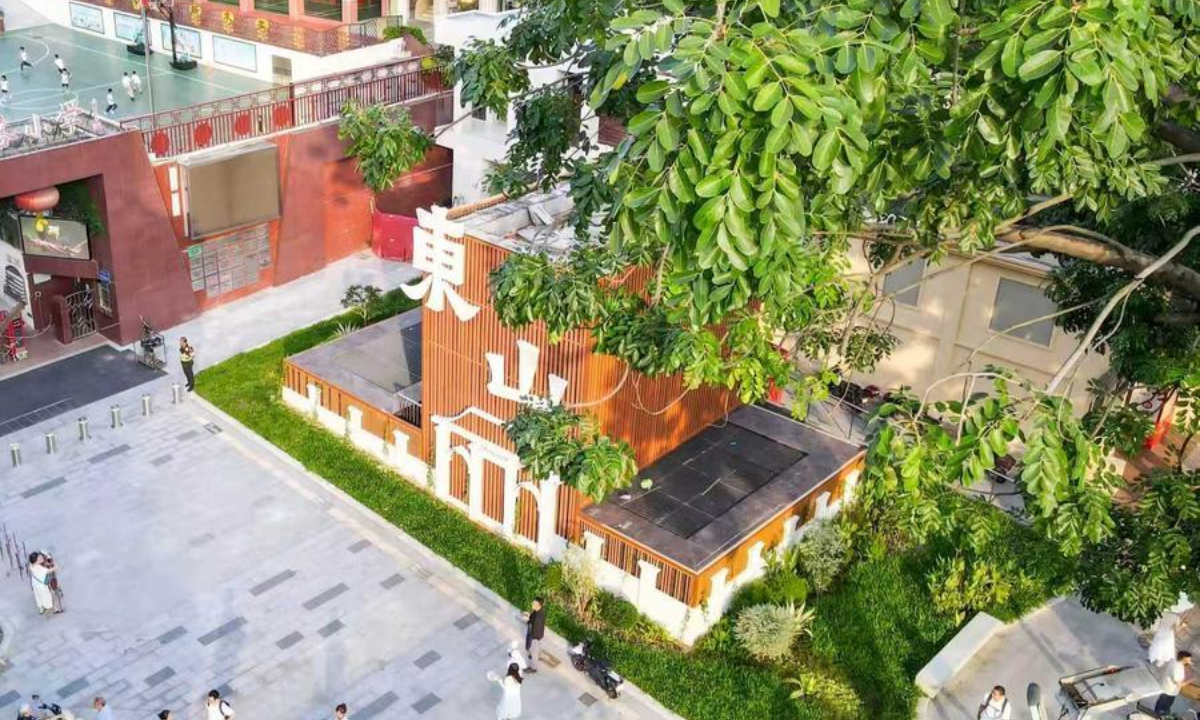
An aerial drone photo taken in October 2025 shows a view of the Dongshan pocket park in Guangzhou, south China's Guangdong Province. (Xinhua)When 72-year-old Shi Jikun opened his windows at home in Yuxi, southwest China's Yunnan Province, he used to hear the repeated thud of balls and blowing of whistles from an indoor sports venue near his residential community.
"During the day, I didn't dare open the windows," Shi said, recalling years when the noise disrupted his daily routine.
The sports venue has since undergone two rounds of soundproofing. Sound-absorbing materials were installed on its walls, while double-glazed soundproof windows were fitted along the side facing the residential area.
The noise has eased. "The neighborhood is quiet now, making everyday life much more comfortable," Shi noted.
Shi's experience is part of a broader move underway across China to tackle one of the less obvious costs of urbanization: the growing amount of noise packed into increasingly dense neighborhoods.
As cities expand, the likes of homes, roads, businesses, construction sites and recreational spaces are often crammed together. China has, notably, been testing a neighborhood-level response to this challenge via the development of "quiet communities," combining physical upgrades with local management and mediation.
This initiative was launched as a national pilot project in May 2023. By the end of 2025, a total of 3,272 quiet communities had been built nationwide, benefiting more than 2.4 million households, according to the Ministry of Ecology and Environment.
This approach now also has a stronger legal footing. On Saturday, China's Ecological and Environmental Code came into force, with a dedicated section on noise pollution prevention and control.
The scale of the problem is reflected in noise complaints. In 2025, cities at the prefecture level and above received about 6.83 million noise-related complaints, with social-life noise accounting for 73.2 percent.
Noise from neighbors, equipment malfunctions and disturbances from square dancing, a popular group exercise in China often held by middle-aged and older residents in public spaces, were among the most common issues raised.
China's quiet-community program is designed to address such problems before they become recurring disputes. "Quiet communities do not mean that there should be no sound," said Lu Lu, deputy head of the noise management division at the Ministry of Ecology and Environment.
The goal, Lu said, is to create a comfortable and harmonious living environment while balancing everyday activity with residents' need for quiet.
The solutions vary from place to place. In south China's Shenzhen, some newly built residential communities are incorporating noise control at the planning and design stage. Measures include low-noise pavements, vegetation buffers, separated pedestrian and vehicle routes, and automatic noise-monitoring equipment.
Older communities are using renovation projects to address noise concerns. In Xiaoshan District in east China's Hangzhou, Huiyu garden community replaced aging elevators and repaired drainage grates and other public facilities as part of its quiet-community program.
But physical upgrades alone cannot settle conflicts between neighbors.
At Fenglin Shunhe community in Weihai, eastern China's Shandong Province, residents, property managers, community officials and square-dancing groups agreed to end dancing at 8:30 p.m. The main lights in the square switch off at that time, signaling that it is time for the dancers to leave.
The key is to respond quickly to complaints and give residents and activity groups a way to negotiate solutions, said Jiang Chunyan, head of the neighborhood committee.
In another community in Shenzhen, property managers have gone further by treating renovation noise as a process to be managed proactively rather than a problem to be addressed after complaints arise.
Renovation work is divided into nine stages and mapped on a visual noise-management chart. Property managers use the chart to carry out targeted inspections as work progresses. Contractors are also required to work only during designated hours and under fully enclosed conditions.
The program still faces gaps in terms of regional coverage and long-term maintenance. Quiet communities remain concentrated in a few cities, while older neighborhoods and parts of central and western China have fewer projects. Some communities also face difficulties maintaining noise-control measures after initial upgrades are completed.
The Ministry of Ecology and Environment plans to incorporate quiet-community development into China's noise pollution prevention and control work for the 2026-2030 period. It has called for regular inspections, dynamic monitoring and follow-up visits to ensure that measures remain effective.
Zheng Shanshan, an official responsible for ecological affairs in Hangzhou's Xiangfu Subdistrict, said the next step should extend noise management from individual communities to larger areas through tools such as sound-environment maps.
"Quiet communities are only a starting point," Zheng said. "We hope to create more quiet spaces across the city."
。

二 |
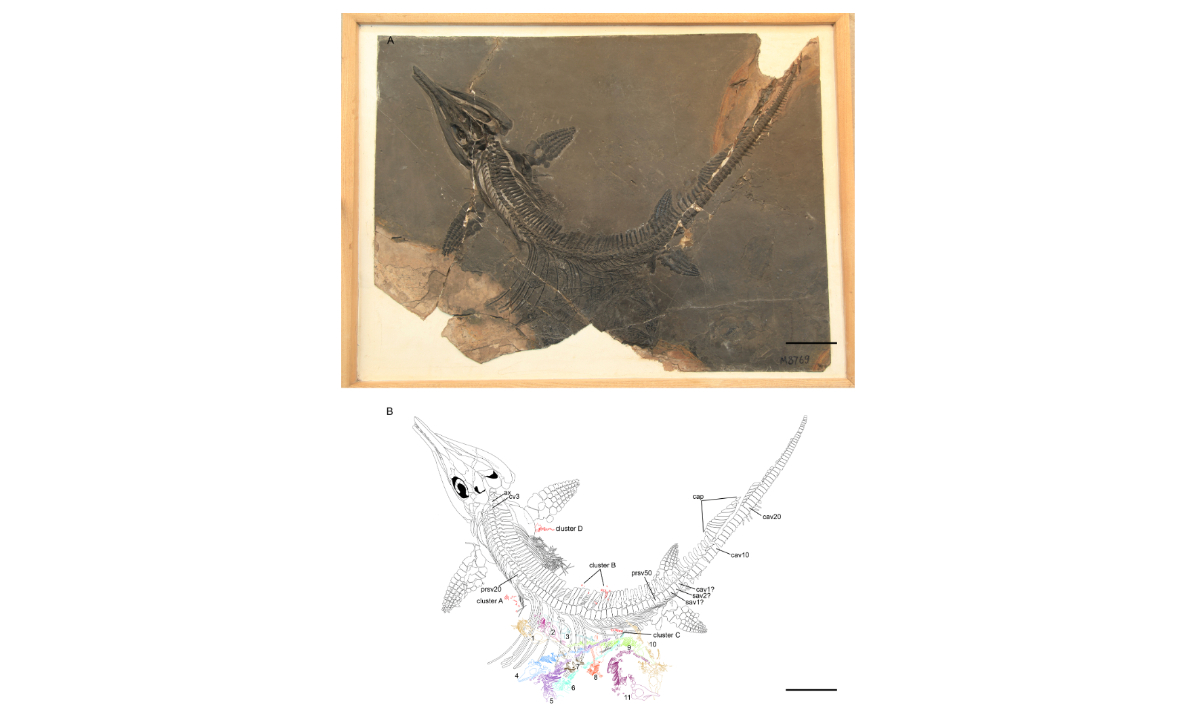
Photo: Screenshot from peerj.com
Chinese scientists studying a 244-million-year-old ichthyosaur Mixosaurus fossil from Southwest China’s Guizhou Province found at least 11 embryos inside the specimen. The discovery sets a new record for the highest number of embryos found in ichthyosaur lineages and reveals that high reproductive capacity in ichthyosaurs emerged earlier than previously believed, chinanews.com reported on Wednesday.
Ichthyosaur was among the most successful Mesozoic marine reptiles, and its reproductive strategy was considered crucial to their adaptation to ocean environments. Its reproductive ability before extinction has long intrigued paleontologists.
A joint research team from the Institute of Vertebrate Paleontology and Paleoanthropology, Chinese Academy of Sciences (CAS), and the Zhejiang Museum of Natural History, has published the study on the ichthyosaur paleontology in the international journal PeerJ.
According to Wang Wei, the paper’s corresponding author and an associate professor at the institute, embryo-preserving ichthyosaur fossils have been found across 11 genera from the Early Triassic to the Early Cretaceous.
However, for ichthyosaur groups that diverged in the Early Triassic, embryo-bearing fossils known to scientists remain scarce, and knowledge about the number of offspring they carried is especially limited. Previous discoveries of pregnant specimens, such as Chaohusaurus and Mixosaurus, contained no more than three embryos, suggesting limited early reproductive capacity among early ichthyosaurs.
According to Gu Shengxiao, the paper’s first author and a researcher at the Zhejiang Museum of Natural History, the study examined an almost complete adult Mixosaurus panxianensis fossil from Guizhou’s Middle Triassic strata, dating back about 244 million years. The specimen measures 112 centimeters long, including a skull length of 22 centimeters, with only the tail tip missing.
The researchers identified 11 fetal ichthyosaur skeletons with skulls inside the adult specimen’s abdomen, confirming they were embryos rather than cannibalized prey based on their position and morphology. There are also fossil pieces outside the belly of the adult, which could belong to the 11 or represent other embryos.
All embryos in the Mixosaurus panxianensis fossil were at a similar late developmental stage, suggesting the mother died shortly before giving birth, according to the researchers.
The Mixosaurus panxianensis fossil containing at least 11 embryos sets a record for Triassic ichthyosaurs and all known ichthyosaur species. The researchers believe this indicates that Mixosaurus may have adopted a reproductive strategy of producing large numbers of offspring in a single birth. This exceptionally high reproductive capacity may have provided them with a survival advantage.
Among Triassic ichthyosaurs and all known ichthyosaur groups, Mixosaurus is the genus with the largest number of fossil specimens and is also one of the most widely distributed ichthyosaurs.
The researchers said the multi-embryo Mixosaurus panxianensis fossil may represent an extreme case, but it confirms the species’ ability to produce large numbers of offspring, potentially contributing to its dominance among contemporaneous marine reptiles.
The study offers the first fossil evidence of high fertility in Triassic ichthyosaurs. Future research will examine other embryo-bearing Triassic ichthyosaurs to determine whether a multiple-offspring reproductive strategy was common in early ichthyosaur evolution and what factors drove this trait, Wang said.
Global Times
。
Current article:http://pva.suilaoheirenzhaizhaikang.sbs/fldzxrb/20260826/919652.html
Published on:20:05:54
