
妈妈咪呀
Zero-tariff policies, systemic support help African countries expand exports, upgrade industry_我的网站

A |
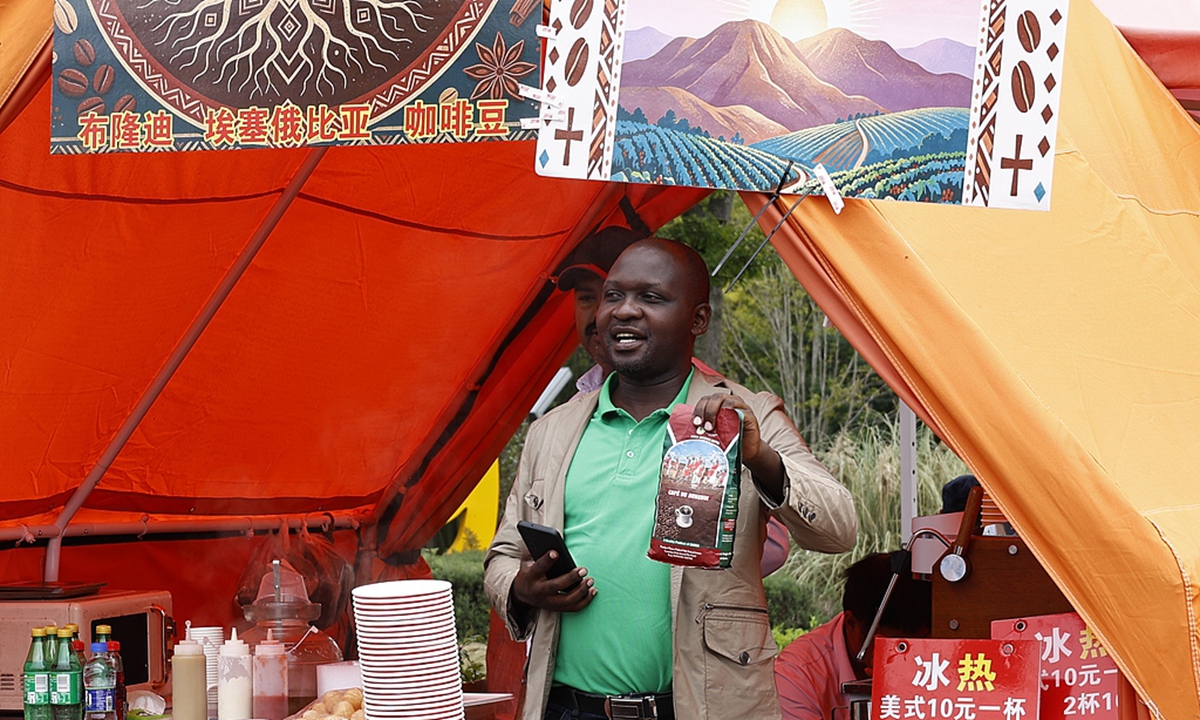

For Ethiopia, which is believed to be the birthplace of coffee, this initiative presents significant opportunities.
"Coffee is not only our leading agricultural export but also an integral part of our cultural heritage. For centuries, Ethiopians have preserved a unique coffee tradition, where families and neighbors gather to prepare and share coffee in a ceremony that symbolizes hospitality and friendship in community," Geleta said.
With improved market access, Ethiopian coffee exports to China are expected to grow substantially. China has become one of the world's fastest-growing coffee consumption markets and is now Ethiopia's third-largest coffee export destination, Geleta noted.
In 2025, China's coffee industry was valued at 354.9 billion yuan ($52.63 billion), up 13.3 percent year on year. Annual per capita consumption rose from 22.24 cups to 28.57 cups, while the value of coffee bean imports increased by 73.9 percent year on year, according to the 2026 China Urban Coffee Development Report released in July.
The Ethiopian diplomat believes China's zero-tariff policy will enhance the competitiveness of Ethiopian coffee, increase export earnings, and encourage greater investment across the coffee value chain, including processing, packaging, branding, logistics and quality certification.
Since July 20 this year, China has granted full market access to coffee beans meeting quarantine requirements from all African countries that have diplomatic ties with China. The full market access is regarded as a landmark achievement in China-Africa cooperation on agricultural market access.
Geleta said that Ethiopia warmly welcomes this landmark policy. Having joined China's zero-tariff arrangement in 2024, the East African country has already witnessed its positive impact on bilateral trade and economic cooperation.
"The policy goes beyond tariff preferences. It demonstrates a practical commitment to South-South cooperation based on mutual respect, shared development and win-win partnership," Geleta noted.
It creates new opportunities for African countries to diversify exports, strengthen productive capacity and participate more actively in global value chains, the diplomat said.
As members of the Global South, Ethiopia and China share a common vision of promoting inclusive and sustainable development. This zero-tariff initiative establishes a valuable benchmark for building agricultural trade rules that better reflect the development needs of emerging economies, she noted.
It also complements the objectives of the FOCAC and the African Continental Free Trade Area (AfCFTA) by supporting greater regional integration and international market access, said Geleta. AfCFTA is a flagship initiative of the African Union designed to transform the continent into the world's largest free-trade area, per the AU.
From Geleta's observation, the market access granted by China is not merely a trade policy, but also a practical example of development cooperation that benefits ordinary people.
Coffee farming sustains millions of Ethiopian households, so greater access to China's market bears direct significance for poverty alleviation, rural advancement and national economic transformation. The policies foster steady demand for Ethiopian coffee, increasing farmer's earnings and bolstering rural community resilience, she said. Such gains closely echo the China-proposed Global Development Initiative, which emphasizes poverty reduction, food security, inclusive growth and sustainable development.
The diplomat said Ethiopia welcomes Chinese investment in agricultural processing, cold-chain logistics, food manufacturing and value-added industries in Ethiopia. Such investment will support industrialization, technology transfer and job creation while strengthening resilient supply chains, Geleta added.

Mile said the policy provides a structured, phased approach to reducing trade difficulties and securing institutional guarantees. "It perfectly embodies the strong, historical foundations built through FOCAC over the years to forge a modernized, forward-looking economic future."
Amid comments saying that African countries still face challenges beyond tariffs, including logistics, standards and market-access capacity, Ambassador Mile of Lesotho said that tariff reduction is a necessary condition for trade expansion; however, more conditions are required to reach deals.
Take Lesotho, a landlocked country, for instance. The country faces acute logistical hurdles and high transport costs. Complying with sanitary and phytosanitary measures, as well as quality standards remains a massive challenge for many enterprises in Lesotho.
To fully benefit from the favorable tariff policy, Mile pointed to systemic technical support for African exporters, targeted investments in agro-processing, and enhanced trade facilitation.
"Initiatives recently introduced by China Customs, such as the 'Green Channel 2.0' for agricultural products and expanding authorized economic operator mutual recognition capacity building, are exactly the types of institutional support needed to overcome the non-tariff barriers," she elaborated.
。 天皇誕生日の23日午前、66歳になられた天皇陛下を祝う一般参賀が皇居・宮殿で行われ、陛下は多くの参賀の声に笑顔で手を振られた。

B | 【写真】天皇陛下の66歳の誕生日を祝う一般参賀で、訪れた人たちに手を振られる天皇、皇后両陛下 この日の一般参賀では、天皇陛下と皇后さま、長女愛子さま、秋篠宮さまと紀子さまご夫妻、長男悠仁さま、次女佳子さまが長和殿のベランダに並ばれた。 皇后さまと愛子さまは、ともにレモンイエローのお召しもので、母子で「おそろいカラーコーデ」をなされた。皇后さまのお召しものは光沢のある生地で、愛子さまは首元とそで口にフリルがあしらわれたお召しものだった。 皇后さまと愛子さまは、今年1月2日に行われた新年の一般参賀に臨まれた際も、同じ水色系のお召しもので、色をコーディネートされていた。 また、この日の佳子さまは、鮮やかなブルーのドレスと同色の帽子姿。愛子さまの隣に並ばれ、時折、おふたりが談笑される場面もあった。 天皇陛下は、「誕生日にこのように来ていただき、皆さんから祝っていただくことを誠にありがたく思います。この冬も、多くの地域で大雪や厳しい寒さに見舞われました。雪の事故などで被害に遭われた方々に心からのお見舞いをお伝えいたします。日ごとに春に向かっているのを感じます。みなさんひとりひとりにとって、穏やかな春となるよう願っております。みなさんの健康と幸せを祈ります」と、おことばを述べられ、参賀者の祝意に応えられていた。
Current article:http://pva.suilaoheirenzhaizhaikang.sbs/list_kkxmr/5jur4ct.html
Published on:21:25:04